Typical dishes, farmhouse tradition and Piedmontese flavors
If you come to Barolo for the wine, keep at least one lunch free. At an osteria you can start with vitello tonnato, order plin served on a napkin, and find out that the most interesting sauce of the day is the one made with harvest grape must.
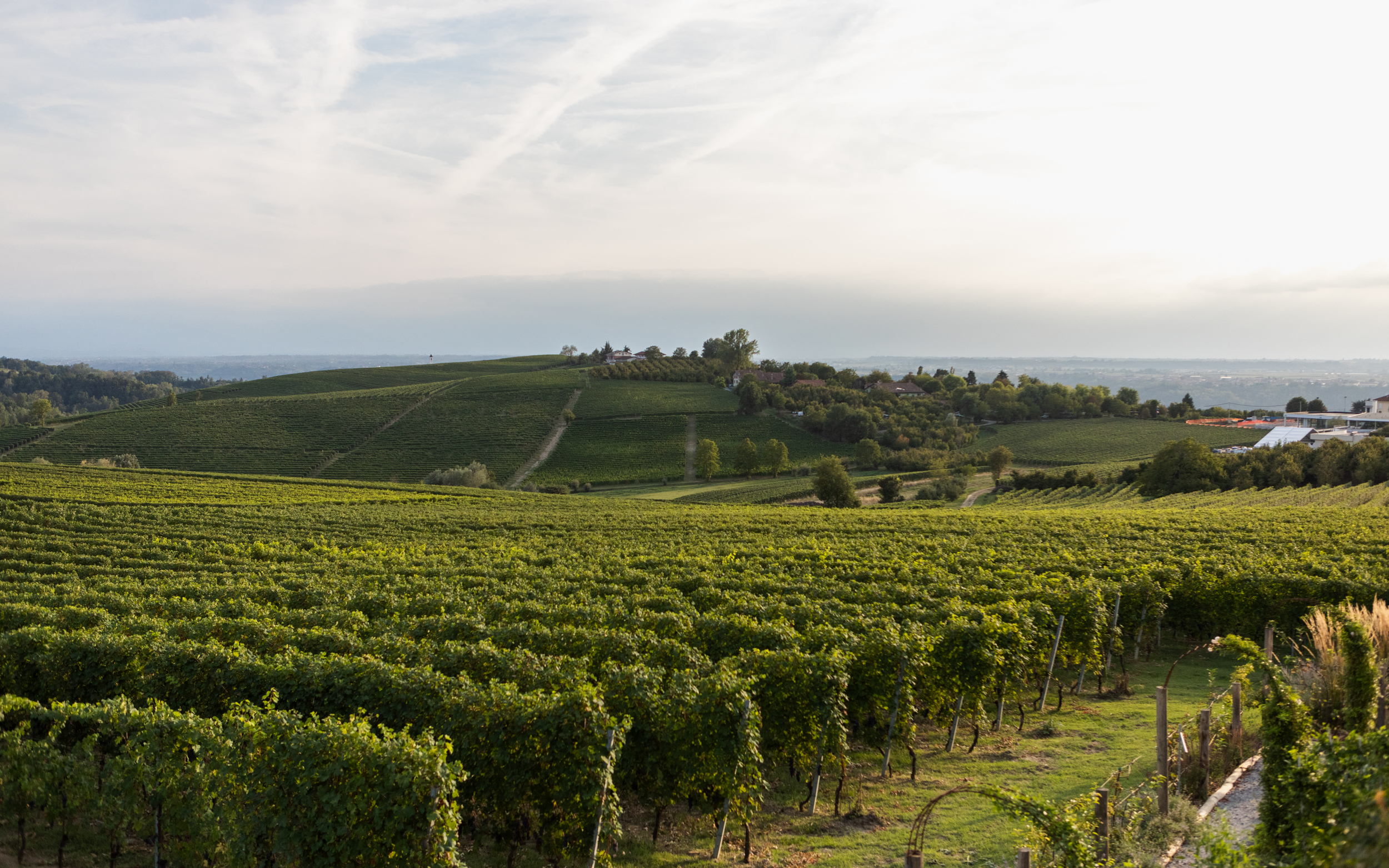
We’re here at Bricco delle Viole, on the hill above the village. From here we’ll tell you what to look for on the menu and which detours to make to taste something different.
How to Start: From Raw Beef to Vitello Tonnato
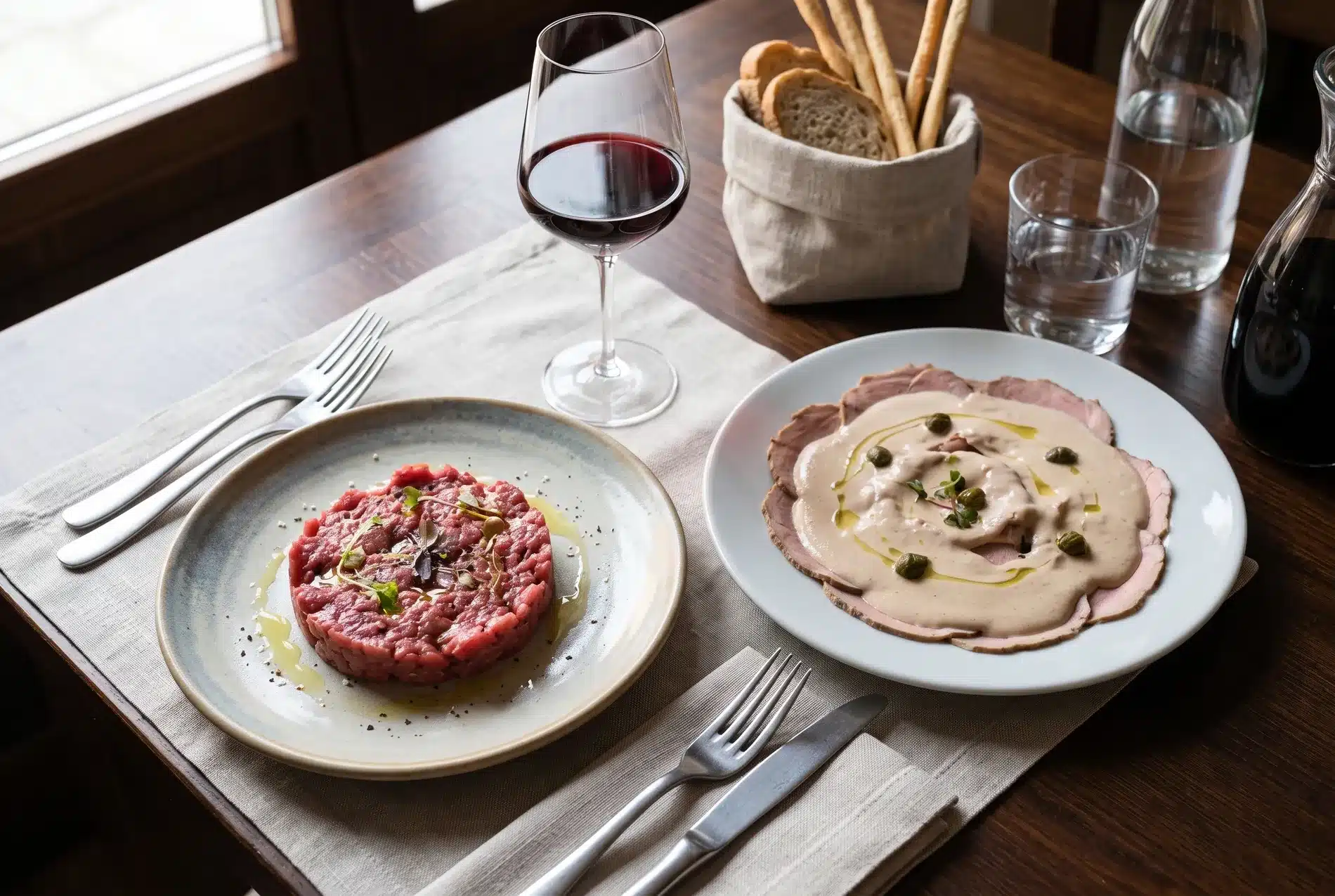
Among the antipasti, look for carne cruda all’albese. In the hand-chopped version, Piemontese beef is cut finely with a knife and dressed with a little oil, salt and pepper. In some preparations a clove of garlic is lightly rubbed on the plate to perfume it.
If you also see carpaccio, the difference is in the cut. With the chopped version you feel small pieces between your teeth, while carpaccio arrives in thin slices.
Vitello tonnato, or vitel tonné, is served cold, with slices of veal covered in a creamy sauce. Every kitchen has its own way of making it. In the most common recipe, tuna, anchovies, capers, oil and lemon give the meat its flavor.
It’s one of those dishes that, ordered in two different osterie, shows you how much a recipe can change while keeping the same name.

Tajarin, the Thin Pasta That Changes from Kitchen to Kitchen
Tajarin are egg tagliolini, thin and often a deep yellow. The sheet of dough is rolled out, rolled up and cut into narrow strands. If you read “40 yolks” on the menu, it refers to the amount used per kilo of flour.
If you find them al sugo di fegatini (with chicken liver sauce), they’re worth trying. It’s a historic dressing from the Lower Langhe and a good example of how farmhouse cooking also made use of chicken giblets.
Roast meat sauce (sugo d’arrosto) is another classic. And if you want to understand how thin the dough has to be rolled, at Vineho you can learn how to make it and bring the tajarin you’ve prepared back to your apartment, to cook whenever you like.
Agnolotti del Plin, Best Tried Served on a Napkin
In Piedmontese, plin means pinch. It’s the gesture used to squeeze the pasta sheet between one little raviolo and the next, giving these agnolotti their shape. The filling changes from kitchen to kitchen.
One Langhe version combines roasts of veal, pork and rabbit with escarole. The result is a small mouthful, with dough thin enough to leave room for the flavor of the meat and vegetables.
You’ll find them with roast meat sauce or with butter and sage. If an osteria offers them al tovagliolo (on a napkin), order them that way at least once. They’re served drained onto a linen napkin, with no dressing, and traditionally eaten with your hands. It’s the most direct way to taste what the filling is like.
Brasato al Barolo, When Wine Enters the Kitchen
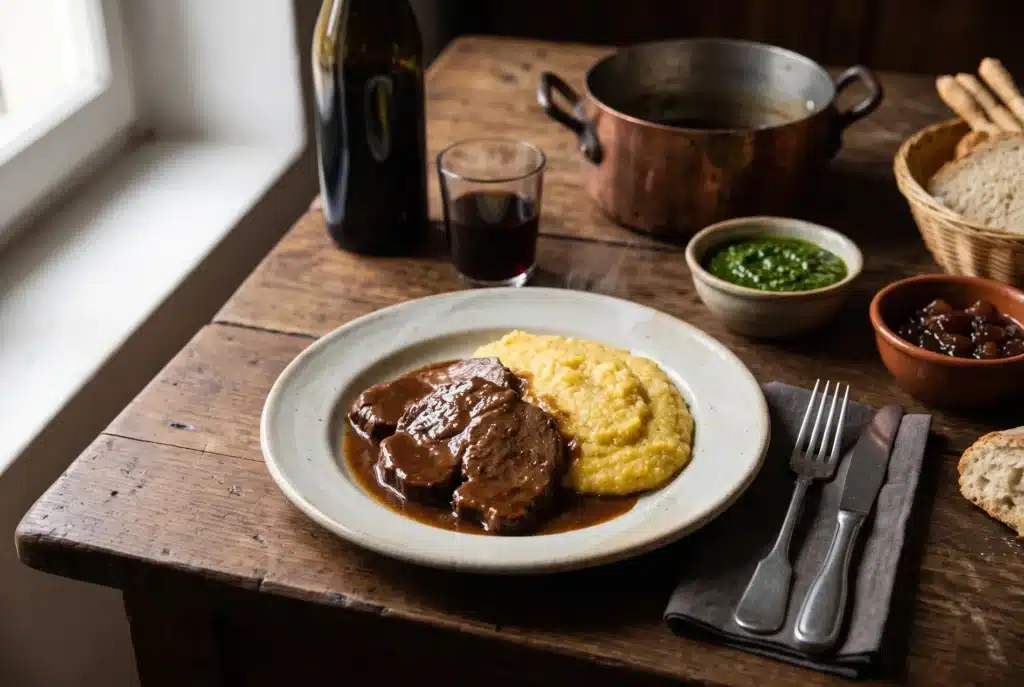
In brasato al Barolo (Barolo-braised beef) the wine is part of the recipe from the very beginning. The meat marinates with vegetables and spices, is then browned and cooks slowly. The cooking juices become the sauce served over the slices. If it comes with polenta, keep a little for the last bite, when mostly sauce is left on the plate.
If you prefer bollito misto (mixed boiled meats), pay attention to what comes alongside the meat. Bagnet verd, a parsley-based green sauce, gives each bite a fresh, savory taste. Cugnà, a preserve of grape must and fruit, adds a sweet note instead. Try them one at a time on the same cut to taste how much the flavor changes.
When It’s Cold: Bagna Caoda and Dogliani’s Cisrà
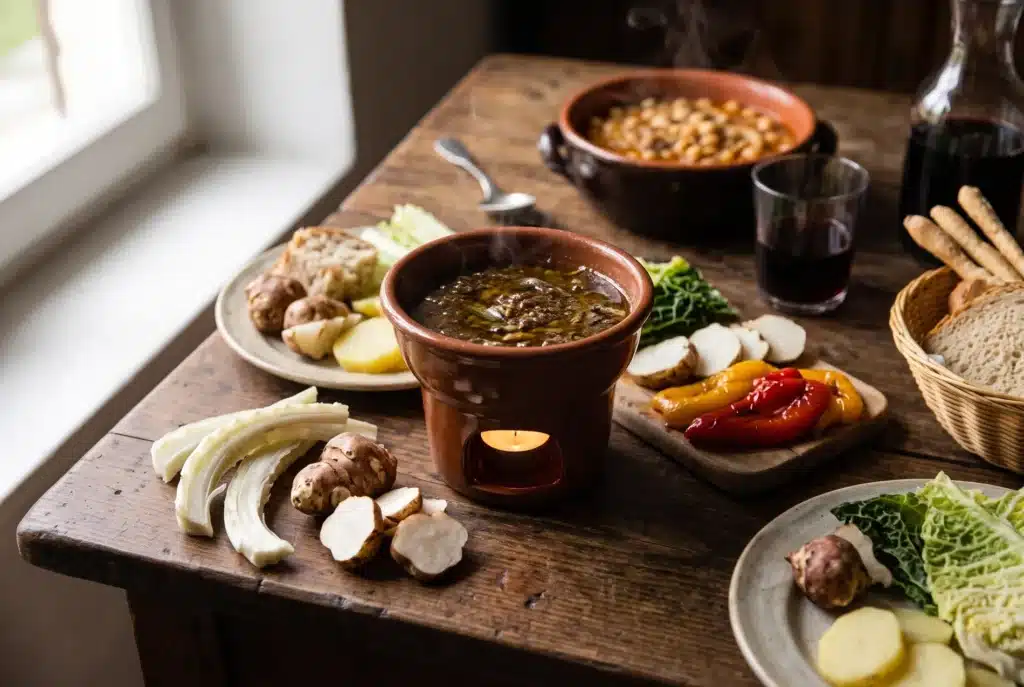
Bagna caoda is a Piedmontese classic particularly tied to the Asti area. Garlic, anchovies and oil form a dip that stays warm in the fujot, the little terracotta burner. You dip cardoons, Jerusalem artichokes, roasted peppers and other vegetables into it.
In Dogliani, however, the dish to look for is cisrà, a chickpea and tripe soup served at the Fiera dei Santi (All Saints’ Fair). According to local memory, the confraternities offered a hot bowl of it to those who arrived on foot for the religious services and for the last market before winter. Today the soup is handed out under the covered market hall. It’s worth the detour if you want to taste a dish in the place and on the occasion it has remained tied to.
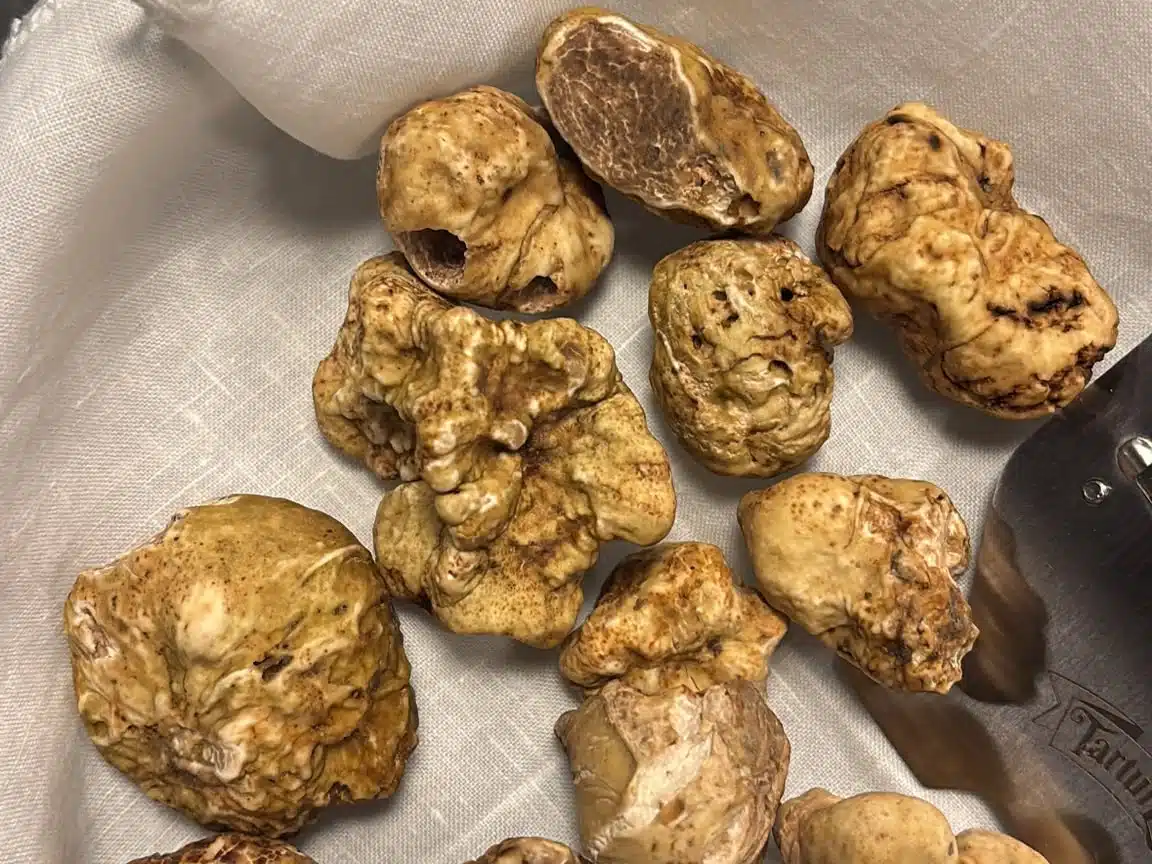
White Alba Truffle: How to Order Your First Taste
Autumn and early winter are the time to keep in mind if you want to taste fresh white Alba truffle. For a first time, try a fried egg or a fonduta (Piedmontese cheese fondue).
The truffle is shaved raw, in thin slices, over the hot dish just as it’s served. If it’s listed on the menu as an add-on, ask how the price is calculated before you order.
The rest of the story is discovered in the woods. The trifolao, the truffle hunter, knows the terrain and the trees. The dog, trained to recognize the scent, signals where to dig. If you stay with us, you can see how they work together by joining a hunt by reservation.
In Alta Langa, a Sheep’s Cheese and a Spoonful of Cugnà
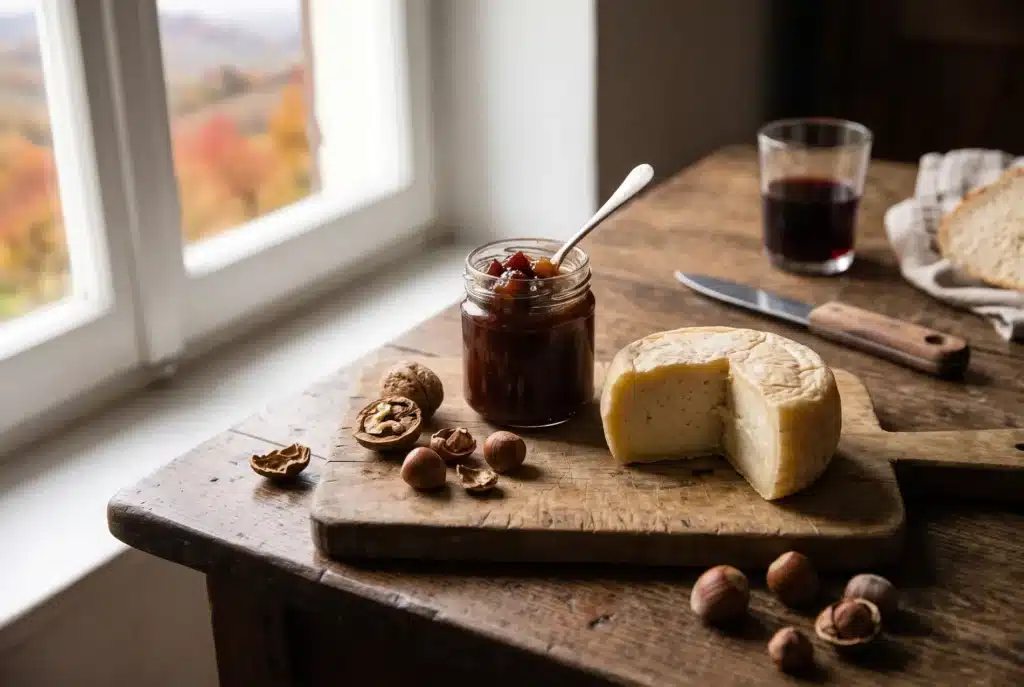
In Murazzano, stop to taste the cheese that bears the village’s name. Murazzano DOP is a small, soft cheese made with Langhe sheep’s milk, on its own or together with cow’s milk.
If at the dairy you find both versions, ask to taste them. It’s also a good chance to hear how the cheese changes with aging.
On the cheeseboard, try cugnà too, sometimes spelled cognà. It’s made by slowly cooking grape must with whatever autumn offers. Depending on the recipe you’ll find pears, quinces, figs, walnuts or hazelnuts.
The texture is like a thick jam, and the recipe changed from farmhouse to farmhouse, following the fruit that was available. If you take a jar home, try it with polenta too.
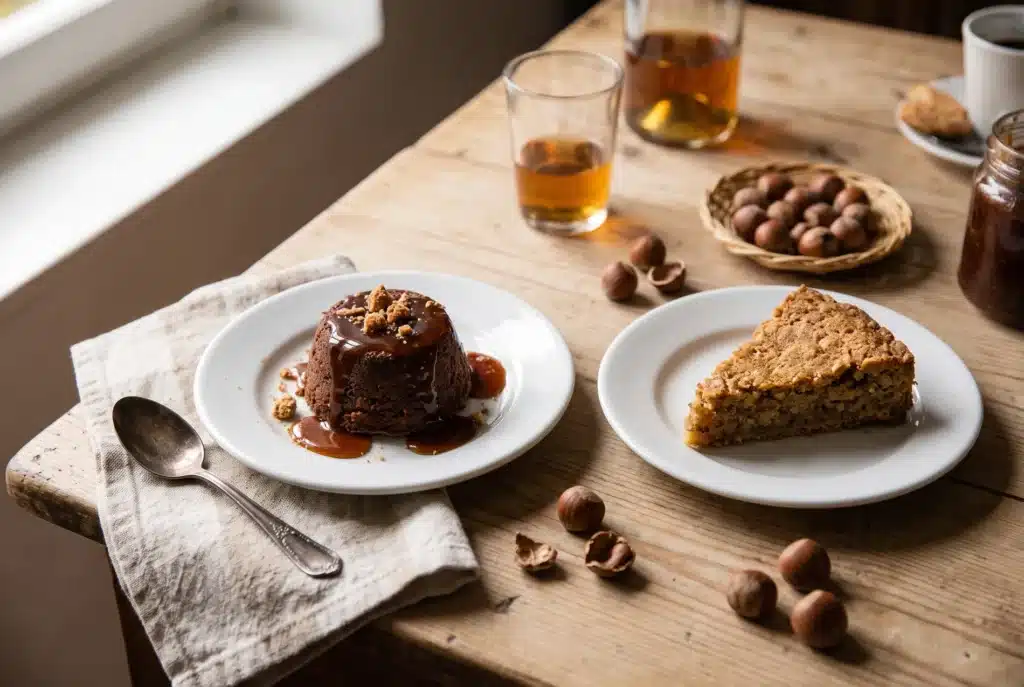
To Finish, Bonèt or Hazelnut Cake
Bonèt is the spoon dessert to look for in a trattoria. It’s made with milk, eggs, cocoa and amaretti, often with a little rum, and when it’s turned out of the mold the caramel runs down over it. In Piedmontese the name also means a hat. A nineteenth-century dictionary links it to the shape of the mold the dessert was baked in.
For the hazelnut cake (torta di nocciole) it’s worth heading all the way to Cortemilia, in the Bormida Valley. It’s a cake that was made at home and later moved into the village bakeries. Take a slice and try a few toasted hazelnuts too.
Tasting them one after the other, you’ll recognize in the cake the flavor of the hazelnuts that grow on these hills.
A Weekend at the Table, Starting from Bricco delle Viole
If you’re here on a Saturday, start at the Mercato della Terra in Alba, in Piazza Elvio Pertinace. You can shop directly from the producers and put together a merenda sinoira. In the countryside it was the late-afternoon break that could stand in for dinner. For yours, a piece of bread, some salami and a tuma (fresh cheese) to share are enough. Save the osteria lunch for the day you tour between Barolo and the nearby villages.
If you have one more day, devote it to Alta Langa. You can start from Murazzano for the cheese and arrive in Cortemilia for the cake and a walk among the terraces. Here at Bricco delle Viole we’re happy to help you choose a dairy to visit on your own and put together the stops of your stay.