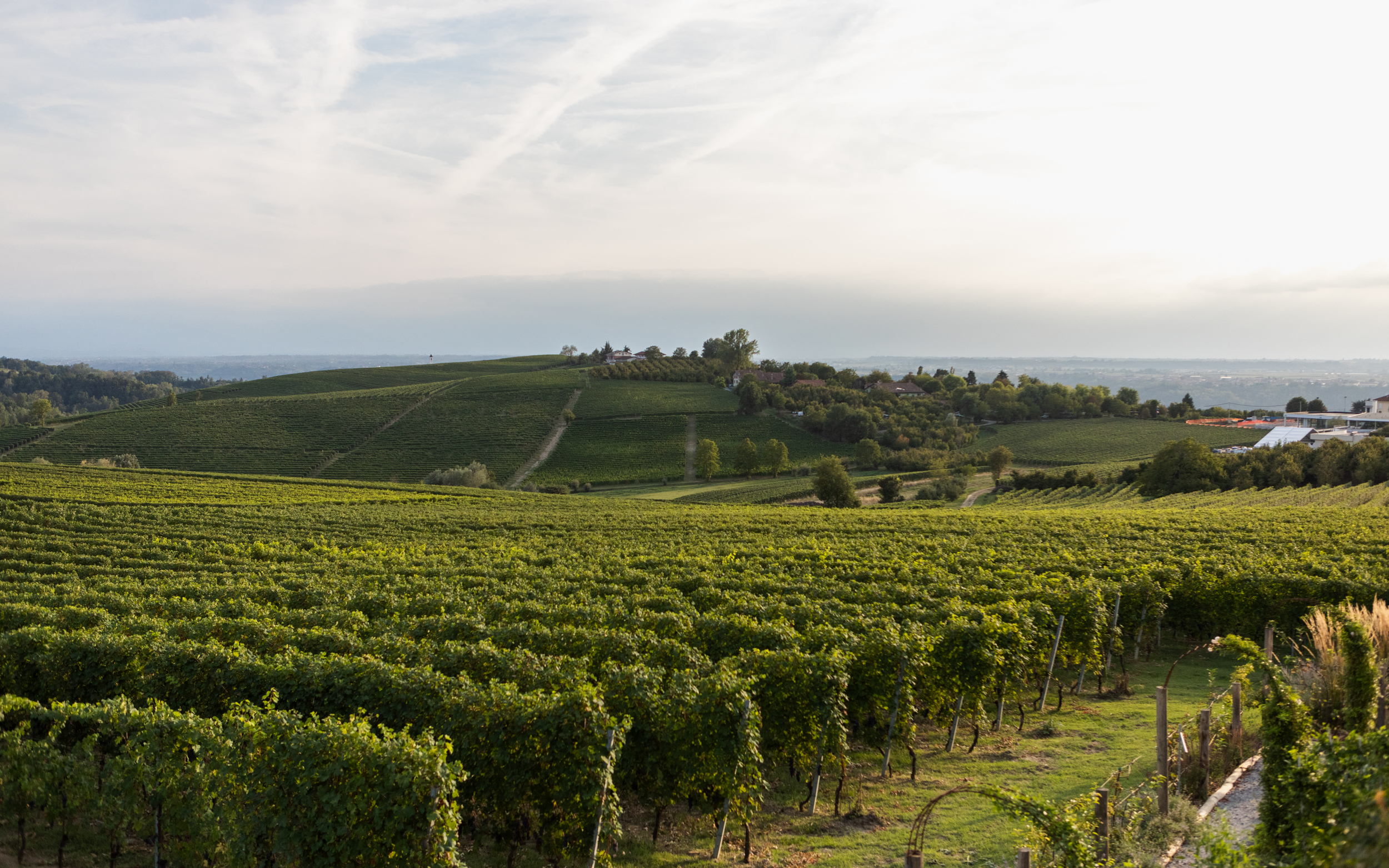
The Langhe is not a territory to quickly “tick off” a list, but a landscape to cross calmly and to experience in all its facets and peculiarities: a road through the vineyards, a sudden viewpoint, a silent square, a cellar, a castle, a lunch that lasts a little longer than expected.
Staying in Barolo, here in the Bricco delle Viole, means starting from one of the most evocative points of this landscape. We are in the center of a land famous worldwide for wine, but also for its villages: small, well-kept, rich in history, and perfect to discover without rushing.
Between Barolo, La Morra, and Neive, you can build an intense itinerary, ideal for those who want to know the most authentic soul of the Langhe. Three different villages, three ways to experience the territory, three stops that tell why these hills have become so special.
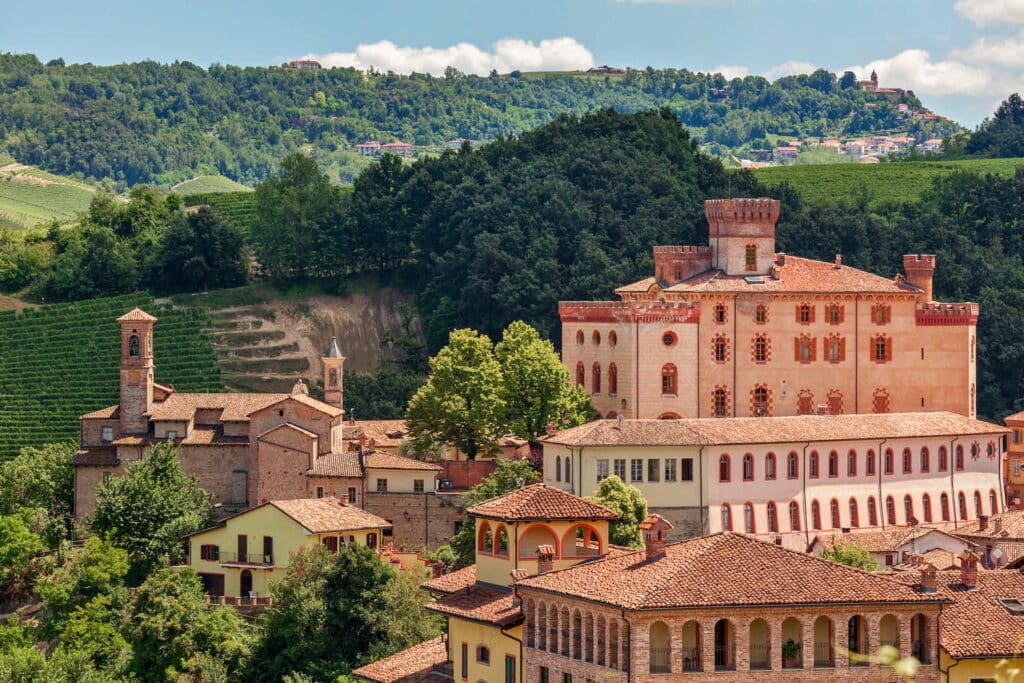
Barolo: the village that bears the name of the wine
Barolo is small, but it has a huge name. It is one of those places where the boundary between village, wine, and landscape becomes almost impossible to separate. You arrive among the hills, enter the village, and immediately find yourself immersed in a specific atmosphere, which is what those who come here rightfully expect to find: wineries, wine shops, glimpses of the vineyards, cozy streets, courtyards of old farmhouses.
The historic center is easily visited on foot. There is no need for a rigid schedule: Barolo must be walked, observed, tasted. The heart of the village is Piazza Falletti, dominated by the Castle, one of the symbolic places of the town. Today the castle houses the WiMu, the Wine Museum, a multimedia journey that tells the story of wine not just as a product, but as culture, myth, history, and the relationship between man and territory.
It is an interesting visit even for those who are not experts. In fact, perhaps especially for those who want to understand why wine has become so important here. The WiMu guides the visitor into a broader narrative: wine in history, in the arts, in local traditions, up to the deep bond with Barolo and the families who contributed to its fame.

The Castle, the Regional Enoteca, and the myth of Barolo
The Castle of Barolo is not just a beautiful setting. It is one of the points where the history of the village becomes more concrete. Within these walls, the story of the Marquises Falletti, the figure of Giulia of Barolo, and the birth of modern Barolo intertwine—that wine which over time would become one of the most recognized symbols of Piedmont.
In the ancient cellars of the castle is also the Regional Enoteca of Barolo, a precious place for those who want to approach the different interpretations of the “king of wines”. It is not simply a retail space, but a gateway to the world of Barolo: producers, vintages, differences between areas, styles, and different sensibilities.
And it is precisely here that you understand something important: Barolo is not just “a wine”. It is a territory made of hills, exposures, soils, families, crus, and traditions. You only need to move slightly to find different nuances. This is why staying at Bricco delle Viole is a special privilege: it means already being inside one of the most fascinating areas of the municipality, in a position that speaks for itself about the relationship between landscape and wine.
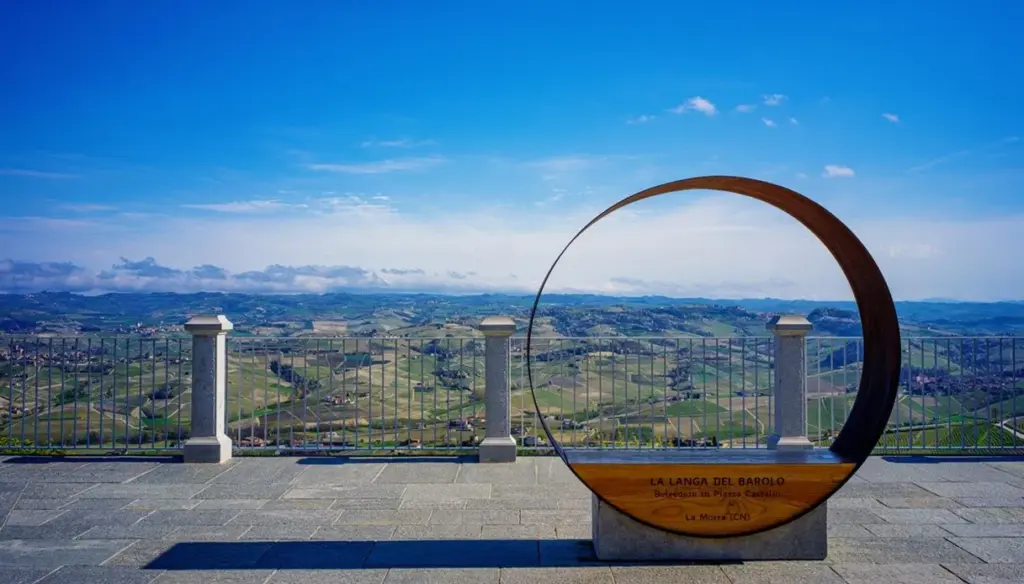
La Morra: the natural balcony over the Langhe
A few minutes from Barolo, La Morra is one of the most panoramic villages in the area. The reason is simple: it sits in a high and open position, with a sweeping view over the Barolo hills, the vineyards, and, on clear days, the Alpine arch.
The starting point is Piazza Castello, the great viewpoint of the village. From here, the gaze sweeps across the vineyards and neighboring villages: Barolo, Verduno, Serralunga, Castiglione Falletto, Monforte.
It is one of those panoramas that help to understand the geography of wine better than many explanations. The hills are not all the same: they change inclination, exposure, height, color. And every difference, in the glass, can become character.
The historic center of La Morra deserves a quiet stroll, perfect for a mid-day stop, perhaps before a tasting or a dinner with a view.
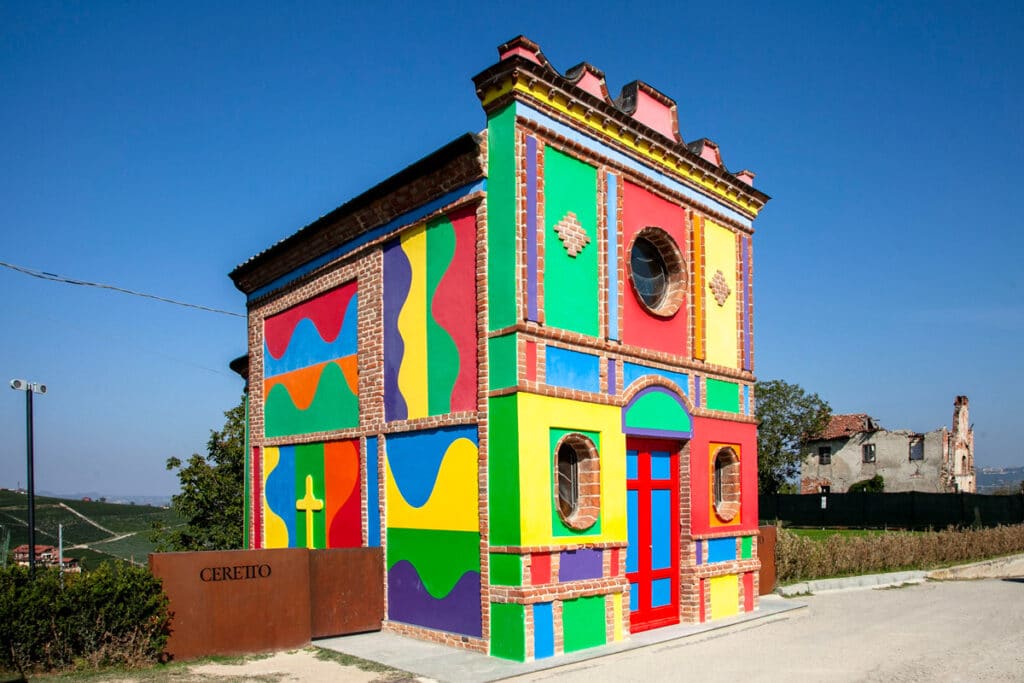
The Barolo Chapel and art among the rows
Among the most well-known images of the Langhe is certainly the Barolo Chapel, or Chapel of the Brunate, immersed in the vineyards between Barolo and La Morra. Colorful, highly photographed, almost unexpected amidst the vines, it has become one of the most contemporary symbols of the territory.
Its history is peculiar: born as a small shelter for those working in the fields, it was reinterpreted in 1999 by artists Sol LeWitt and David Tremlett. The result is an open-air work of art, where contemporary language meets one of Italy’s most famous winemaking landscapes.
There is, however, an important note: the Barolo Chapel is temporarily inaccessible due to renovations and will be open to visitors again in autumn 2026. Therefore, before including it in an itinerary, it is always best to check for updated accessibility. Even when it cannot be visited up close, it remains a strong reference in the visual narrative of the Langhe: an example of how this territory knows how to combine wine, landscape, and art without losing its identity.
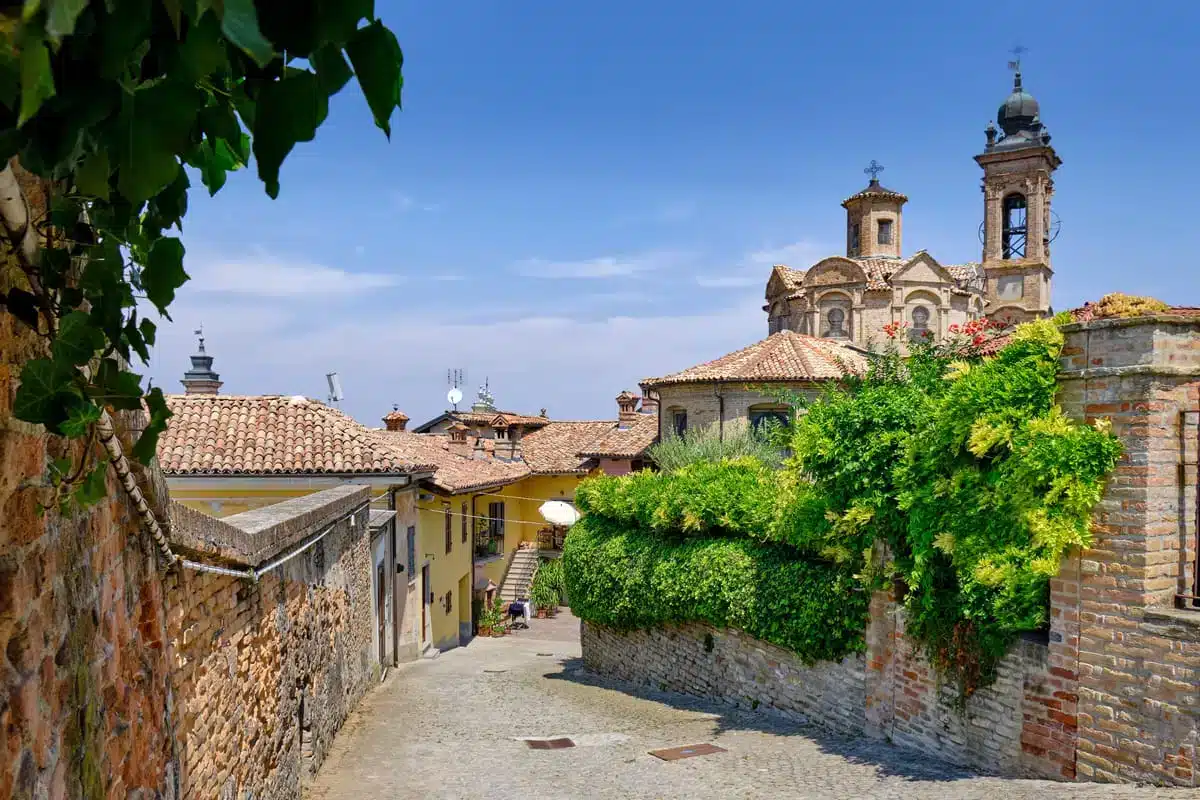
Neive: the medieval charm of the Barbaresco Langa
If Barolo and La Morra primarily tell the story of the Barolo Langa, Neive leads towards another soul of the territory: that of Barbaresco.
Listed among “The Most Beautiful Villages in Italy,” Neive has a very well-preserved medieval historic center and is therefore famous all over the world. It is a village to be discovered by walking uphill, through cobbled streets, terracotta buildings, hidden courtyards, and enchanting glimpses.
The upper part of the village is the most evocative: here you can find some of the most interesting historic buildings, including the Clock Tower, one of the symbols of the town. The visit does not require haste.
It is an ideal stop for those who want to expand their view beyond Barolo and discover another great Piedmontese wine area.
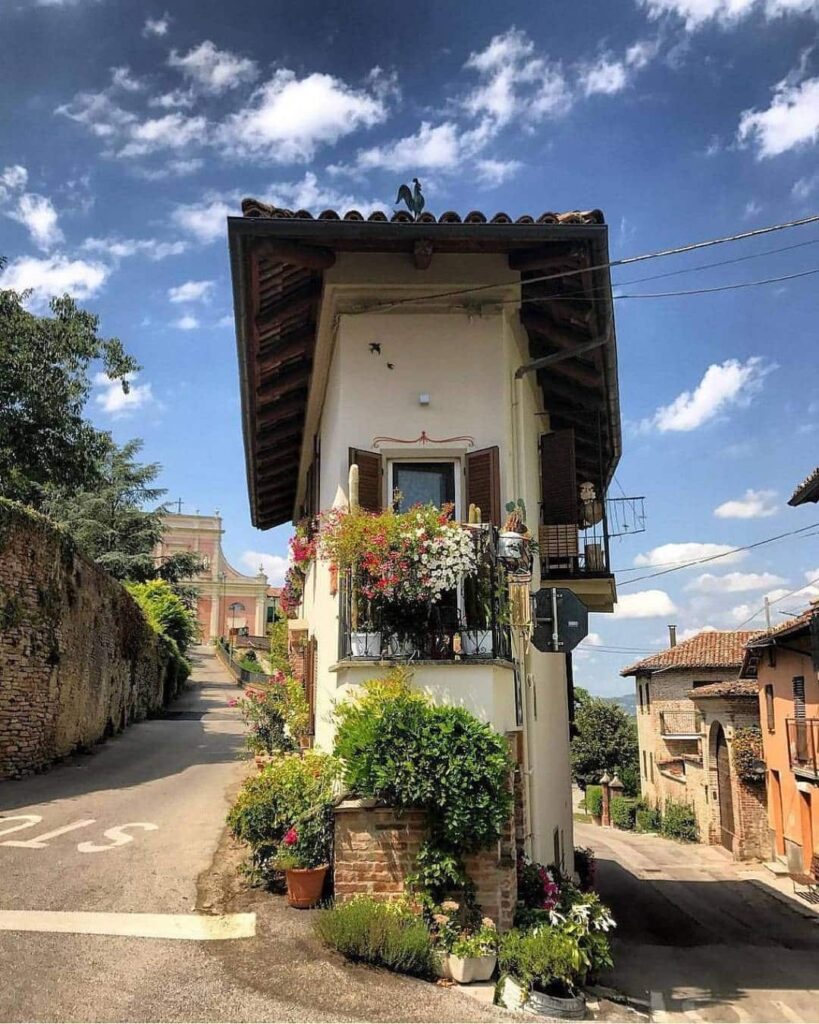
What to see in Neive, without rushing
In Neive, the advice is simple: let the village guide you. You can start from Piazza Italia, enter the streets of the historic center, observe the noble palaces, climb towards the tower, and stop at the panoramic points or in a place to drink a good glass.
Among the most interesting elements are the brick architectures, the historic facades, the wineries, and the small shops linked to wine and local products.
It is also a perfect village for those who love taking photographs. Not just grand panoramas, but details: a door, a staircase, a window, a curve in the road, a light entering between the houses. In this sense, Neive is perhaps one of the most “narrative” villages of the Langhe: it doesn’t impose itself, but it lingers. In short, if you are looking for an “Instagrammable” place, you are in the right spot.
A possible itinerary starting from Barolo
For those staying at Bricco delle Viole, an itinerary among Barolo, La Morra, and Neive can be easily built.
A first day can be dedicated to Barolo and La Morra. In the morning you visit Barolo, with the castle, the WiMu, and the Regional Enoteca. Then you move to La Morra for lunch, a walk in the center, and a stop at the viewpoint. In the afternoon, you can include the Barolo Chapel area or a scenic route through the vineyards.
Neive, instead, can become the destination for a second day, perhaps combined with Barbaresco or Alba. It is a perfect trip to discover another part of the Langhe without going too far.
The beauty is that every movement becomes part of the experience: the roads between one village and another cross vineyards, hazelnut groves, ridges, and small towns that deserve even just a sudden detour.